


Printed Circuit Board (PCB) Repair
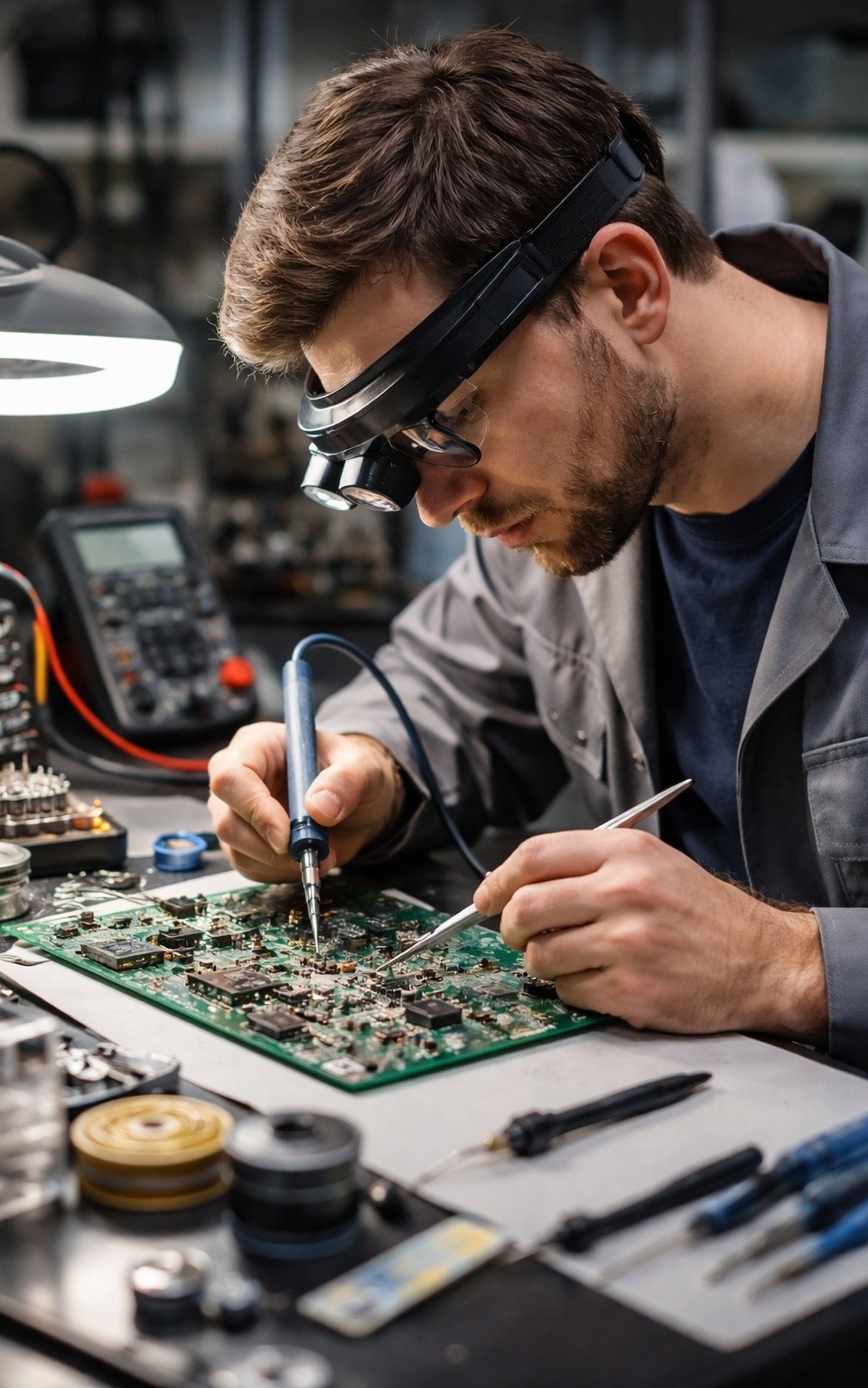
TH-Electronics technicians specialize in printed circuit board (PCB) diagnostics and repairs. Our evaluation process uses advanced diagnostic equipment to identify problems affecting your board’s performance.
Our capabilities include repairing complex Multilayer Boards, fixing broken Traces, BGA Pad Replacement, Through-Hole Repair, Component Replacement, Corrosion Remediation, and Re-Soldering bad connections.
We thoroughly test each repaired board to ensure it meets original OEM specifications, maintains proper functionality to extend equipment life, and maximizes your company’s return on investment.
Whether you need to repair damaged boards or refurbish equipment, TH-Electronics provides cost-effective solutions to ensure your products remain at cutting-edge performance and reliability.
PCB Repair Capabilities
Our PCB repair and remanufacturing capabilities provide a comprehensive range of integrated repair services, spanning from component-level electronics to complex electromechanical assemblies. We offer PCB rework, repair, and modification services, including surface-mount pad repairs, BGA pad repairs, laminate repairs, inner-layer modifications, trace repairs, IC modifications, providing cost savings of 50-80% less than buying new boards.
BGA Repair
Repairing damaged Ball Grid Array pads and components with precision rework.
Calibration & Testing
Ensuring PCBs meet OEM specifications using functional testing fixtures to ensure performance post-repair.
Circuit Board Repair
Fixing damaged traces, replacing failed components on PCBs.
Component Replacement
Swapping out faulty resistors, capacitors, ICs, BGAs, and connectors.
Delamination Repair
Addressing issues where layers of the PCB are separated.
Design Updates
Incorporating additional components or modifying circuitry to accommodate design changes.
Laminate Repair
Damage to the fiberglass board, filling or rebuilding the substrate.
Module Repair / Replacement
Servicing entire functional blocks like I/O modules or drive cards.
Obsolete Parts & Repair
Designing replacements for discontinued items or improving reliability with newer components.
Pad Repair
Reattaching lifted or damaged copper pads, often requiring careful removal and re-soldering.
Printed Circuit Boards (PCBs)
Complete refurbishment of multilayer motherboards, including replacing surface-mounted devices (SMD) and BGA components.
Replacing Faulty Components
Identifying and replacing damaged components, such as resistors, capacitors, diodes, ICs, and transistors.
Solder Joint Repair
Fixing faulty solder joints, caused by overheating or mechanical stress, to restore connectivity.
Trace Repairs
Reconstructing broken or damaged traces to reestablish electrical pathways.
BGA Rework Services
-
BGA Site Modification
Component modification of BGA.
-
Damaged or Missing BGA Pads
Specially designed pads are directly bonded to the surface with an adhesive backing, or component removal and replacement.
-
Installation
BGA, CGA, LGA, QFN, PoP, and other complex packages.
-
Pad & Track Repair
BGA pads and tracks are damaged; we repair pads before reballing in scenarios where critical parts are involved.
-
SMT & BGA Pad Repair
Removing the defective component, cleaning the area, and replacing it with the most appropriate replacement pad.
-
Solder Mask Repair
Solder mask areas near BGA pads are damaged due to the removal of components. Vias and circuits in these damaged areas are prone to shorting.
Repair Process
We evaluate the cost to repair your damaged product based on the complexity of the electronics, the extent of the damage, the cost of replacement components, and the product's overall condition.
Evaluation
Send damaged product or documentation for a free assessment.Diagnosis
Our technicians disassemble the product and perform an electronic inspection with test equipment to pinpoint faults.Failure Analysis
We document failures and provide a repair report detailing recommended repairs.Repair
Sourcing and installing replacement components.Reassembly & Quality Inspection
Product is reassembled and functionally tested to ensure product meets all OEM requirements.Completed Product
We provide a final report detailing all repairs, replacement components, and test results prior to shipping product.Electromechanical Repair
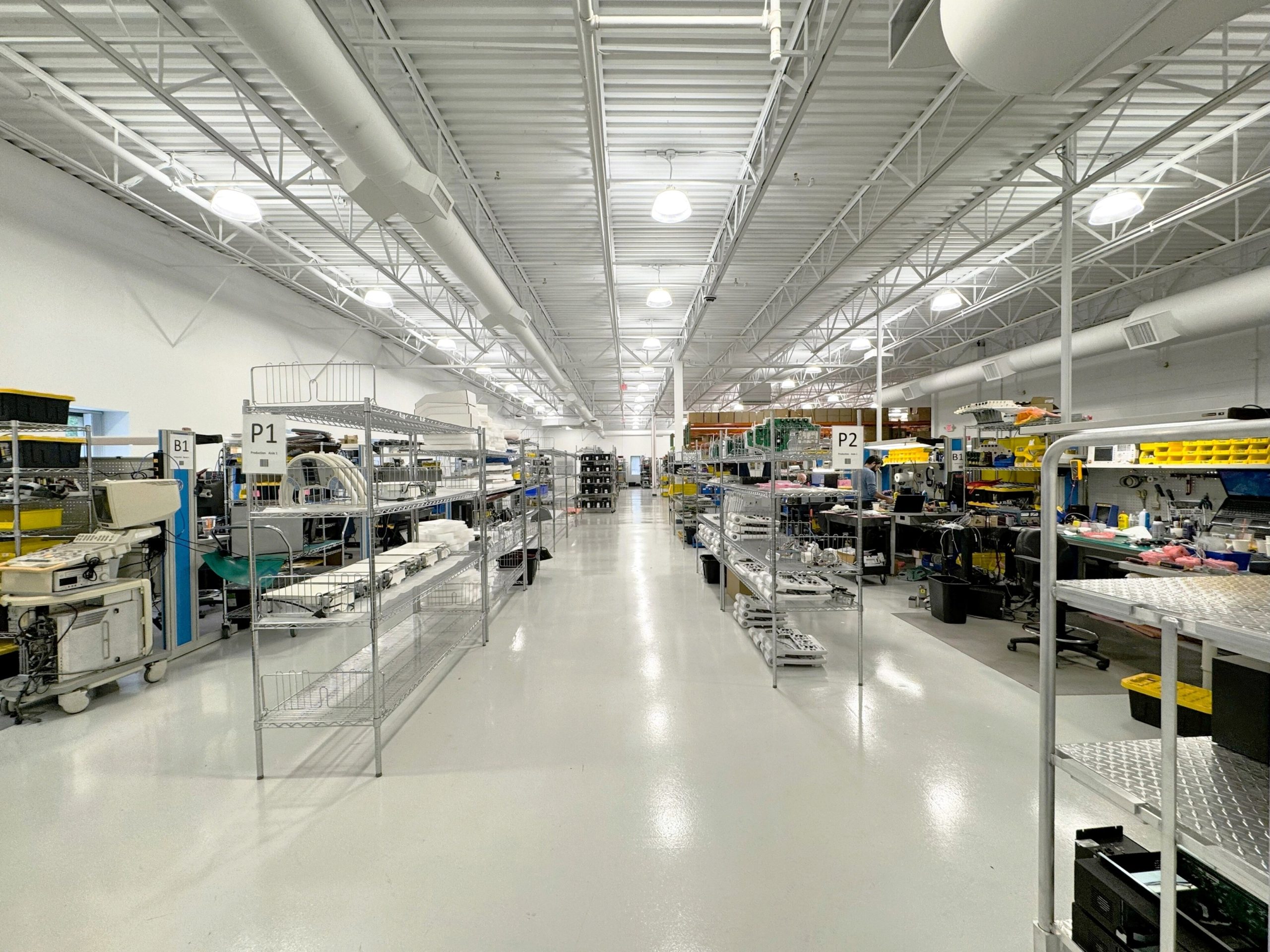
TH-Electronics’ electromechanical full-service repair center seamlessly integrates mechanical systems, electrical components, and subsystems into fully functional, tested, refurbished equipment built to exact OEM specifications.
Our technicians integrate various electrical and mechanical components into sub-assemblies and provide system-level integration of PCBs, bus bars, power supplies, and wire harnesses into fully tested, production-ready systems.
We specialize in warranty repair services and remanufacturing out-of-warranty or discontinued OEM electronic products. Our team of electrical engineers offers the highest level of electronic repair, testing, and electromechanical assembly services.
TH-Electronics has collaborated with OEMs for decades, providing innovative electronic device refurbishment and repair solutions for electromechanical assemblies, to system-level integration, calibration, testing, and supply chain management. Our end-to-end solutions streamline production and ensure reliability and scalability for our customers.

Electromechanical Assembly & System-level Integration
Integration of PCBs, mechanical components, wire harnesses, motion controls, sensors, optical components, and sub-assemblies (cables, power supplies).
Full traceability and regulatory compliance with detailed documentation, including test records, inspection reports, and assembly traceability.
Assembly Types
box builds (enclosures), chassis wiring, cable/wire harnesses, sub-systems.
Box Build Integrations
Integration of a PCB into enclosures with displays, connectors, switches, cable-harnesses, and complex mechatronics.
Cable Assembly
High-performance interconnect solutions, wire harnesses, and cable assemblies.
Component Integration
Combining harnesses with PCBs, motors, sensors, switches, and other electronics.
Controls
Integration of displays, touchscreens, switches, PCBs, and components.
Electrical Components
Mounting, wiring, interconnects, cable termination, connectorization, bonding, grounding, and ESD protection.
Electromechanical Components
Sub-assemblies and modules for integration into larger, more complex systems.
Inspection and Testing
Power-on, diagnostics, calibration, functional test to verify performance, reliability, and compliance with all repair requirements.
Integration
Electronic circuits (PCBs, flex circuits) with mechanical components (enclosures, chassis, sensors, switches).
PCB Assembly
PCB assemblies featuring BGA, CSP, uBGA, flexible circuits, and surface mount technologies.
Technologies
SMT, rigid-flex, component integration, ultrasonic/resistance welding, potting.
Testing & Quality
100% electrical testing, functional testing, and certification.
Wire Harness Fabrication: Cutting, stripping, crimping, soldering, coiling, and terminating wires to spec, handling various gauges
Inspection & Quality Testing
TH-Electronics offers advanced PCB testing methodologies, including In-Circuit Test (ICT), Flying Probe Test (FPT), and Functional Circuit Test (FCT), to verify each board’s electrical performance.
Our commitment to rigorous testing ensures electrical connections on the PCB are correctly established and there are no defects, such as shorts, opens, or incorrect component placements, ensuring our clients receive PCBs meeting their exact specifications.
Electrical testing and certification are vital for verifying the component’s functionality, ensuring the board operates correctly in its intended application, and maintaining the performance and reliability of the final product.
Our commitment to excellence is driven by our cutting-edge technology and extensive technical expertise.

PCB Testing Methods
Automated Optical Inspection (AOI)
Uses high-resolution cameras to detect surface-level defects, such as missing components, incorrect polarity, or solder bridges.
Boundary Scan
An automated method for testing interconnects on high-complexity boards where physical probe access is limited.
Burn-in Testing
Subjects the board to extreme conditions (e.g., high heat or voltage) for an extended period to identify components prone to failure.
Chemical & Physical Analysis
Testing for ionic cleanliness, flammability, and peel strength of the copper traces.
Environmental Testing
Includes thermal shock, humidity cycling, and salt fog testing to ensure durability in harsh conditions.
Flying Probe Testing
Uses moving probes to test electrical performance; highly flexible because it does not require custom fixtures, making it ideal for low-volume prototypes.
Functional Testing
Simulates the final operating environment to verify that the board performs its intended electronic functions as expected.
In-Circuit Testing (ICT)
Often called the "bed of nails," this uses fixed probes to check for shorts, opens, and component values like resistance and capacitance.
Quality Processes
Six-sigma / IPC-A-610 / IPC-A-620 / 5S Lean Manufacturing
X-Ray Inspection (AXI)
Vital for inspecting hidden solder joints, such as those found under Ball Grid Arrays (BGAs) or inside multi-layer boards.
Industry Certifications
TH Electronics’ strong customer focus, established processes, and commitment to continual improvement are reflected in the key certifications that we’ve earned.
We hold the following certifications:
- Certified Six Sigma Black Belt
- 5S Lean Manufacturing
- IPC Certifications

IPC standards help ensure superior quality, reliability and consistency in electronics manufacturing. IPC standards cover nearly every stage of the electronics development product cycle, used by companies of all sizes in more than 90 countries across all manufacturing sectors.